The word that I hear most, when it comes to my work, is ‘lively’. That’s fine by me – the thing I dislike most is ‘dead’ drawings: populated with expressionless, stilted, wooden or generic characters. But I think there is sometimes a perception that ‘lively’ drawings are just dashed off, and somehow require less craft. I don’t mean to sound like a grump, but I thought I’d reveal a little bit about my working process, so you get a sense of the work that goes in.
Figuring out
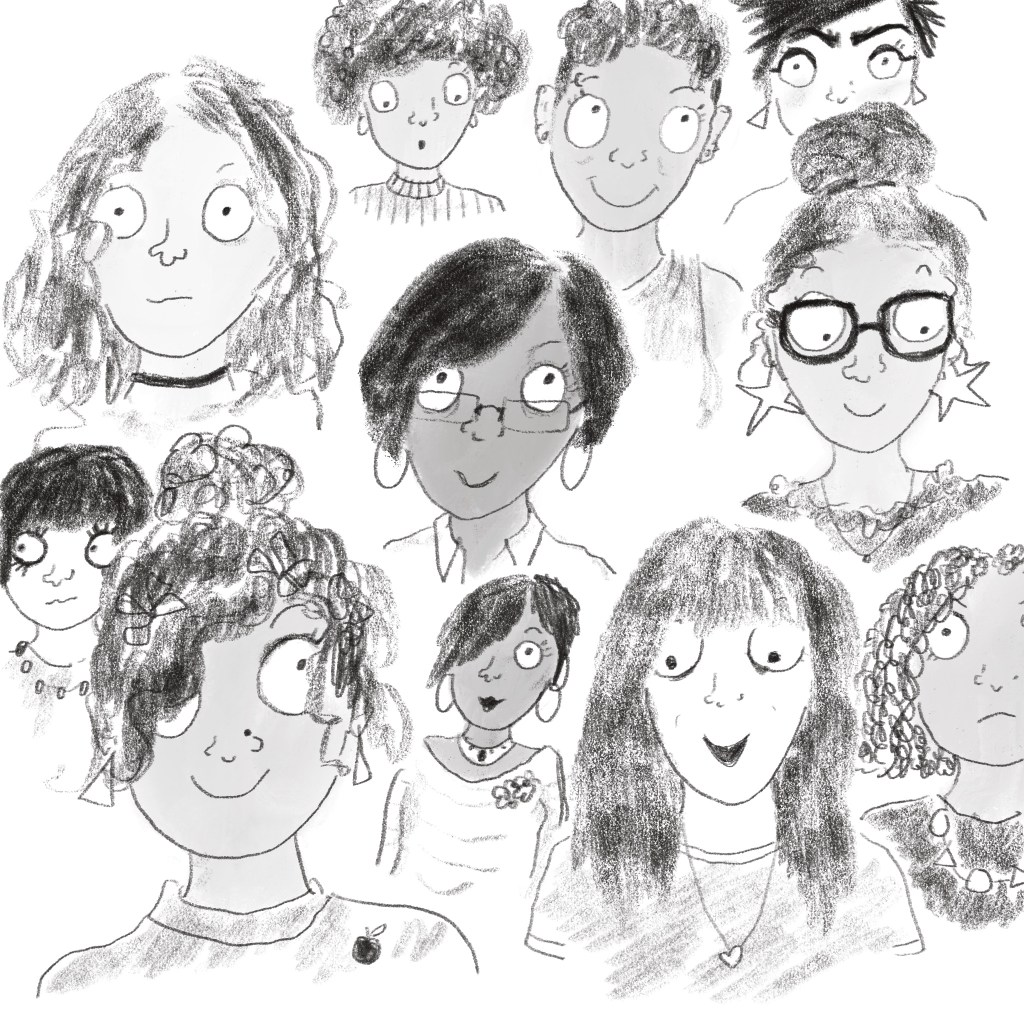
A big part of illustrating someone else’s words is having to make lots of decisions about how these characters and their world should look. A writer can avoid specifics if they choose – for example, there’s no character description in The Giant Spoon, and the current project I’m working on (to be revealed soon!) situates a family in a house, but with no description beyond a few items mentioned. As the illustrator, my job is to ‘see’ all these things. So often my starting point is drawing lots of options for what I have in my head. This brings lots of questions. How does the mum wear her hair? What’s this little boy’s favourite toy? What’s their kitchen like? I’m a character designer, wardrobe department, set designer and casting director all in one. And if these things seem trivial, think about the semiotics: if I give mum a ‘helmet hairdo’ you’ll read her very differently compared to if I gave her a scraggly tangle. If I give the boy a book, that’s suggesting a different kind of boy to one with a super soaker. Even though in real life lots of kids love their books and their super soakers… All these details get worked out through drawing.
Here are a few examples:
Seeing the story unfold
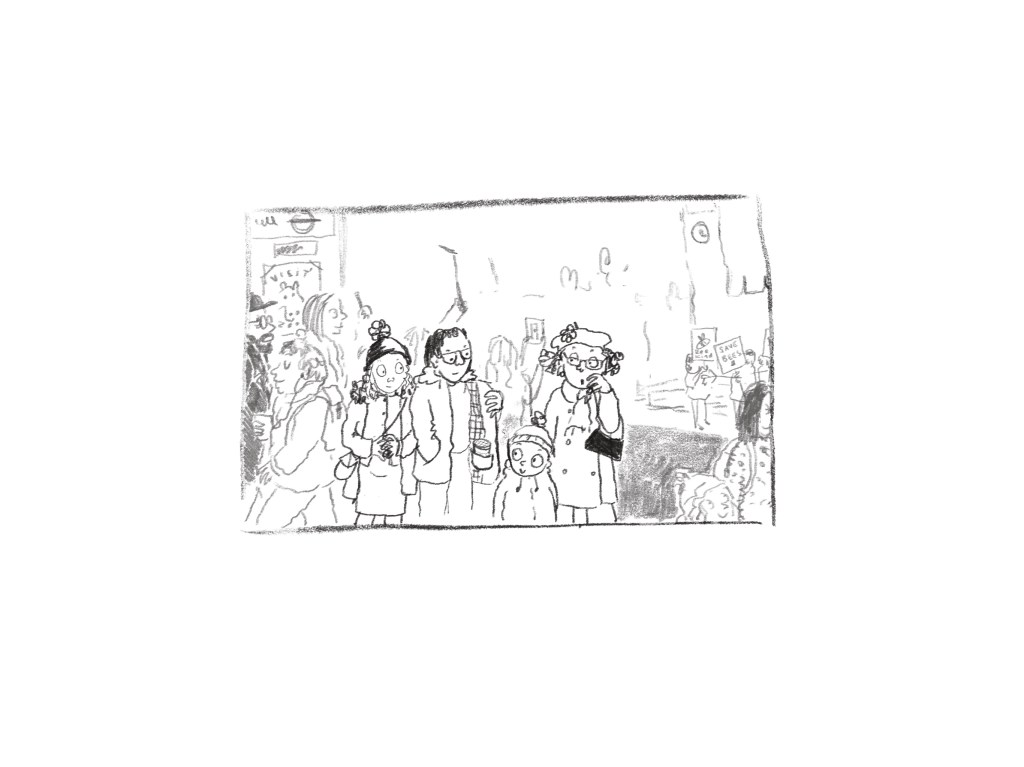
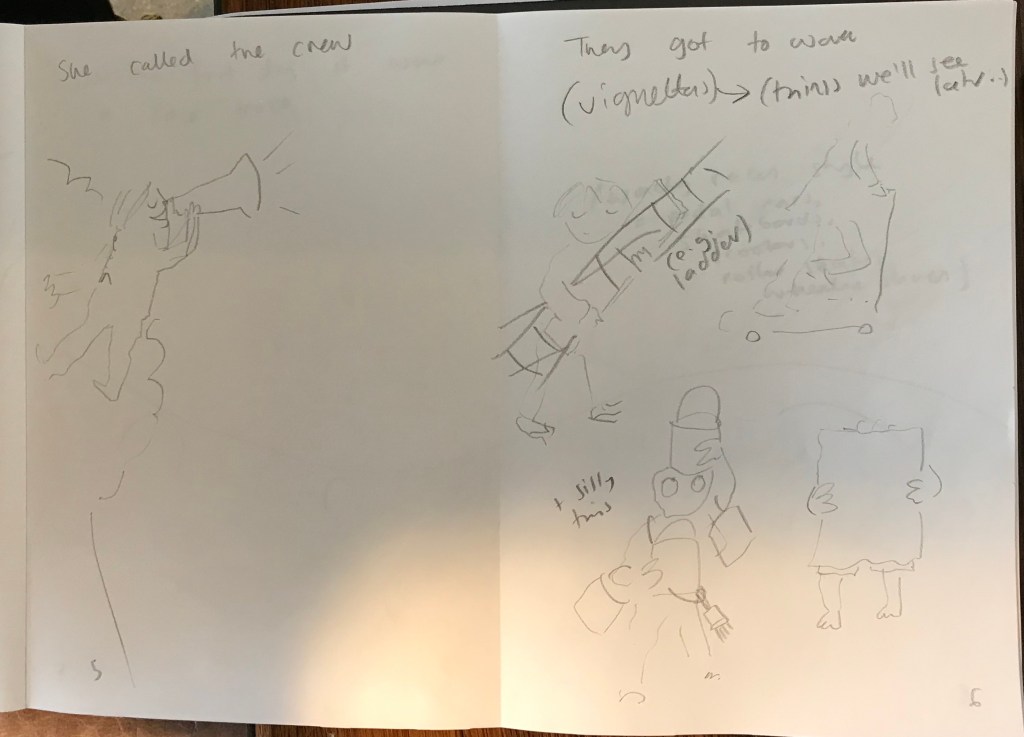
Figuring out goes hand-in-hand with working out the overall flow of the story across the pages. There’s almost always some limit in he number of images that can be used. For example, picture books need to fit a certain page range and work with the way the final book is folded and bound. If you are seeing the story as much as you’re reading it, then the visual flow and interplay between words and pictures really matters. This is equally true for grown-up storytelling (I’ve just finished working on a series of postcards for an audio production, to foster mindful listening and encourage conversations in response to the deep and sensitive topic at the heart of the story). All of this involves drawing – I usually start with layout paper or final size digital canvases, and sketch out how I see the whole thing working together.
Again, some examples:
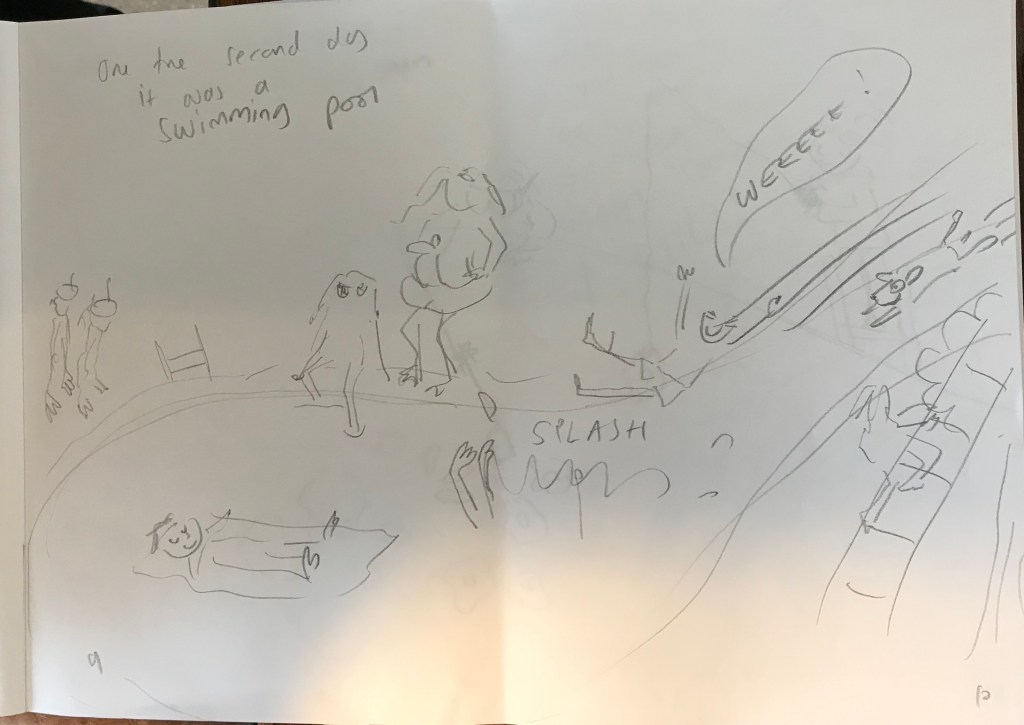
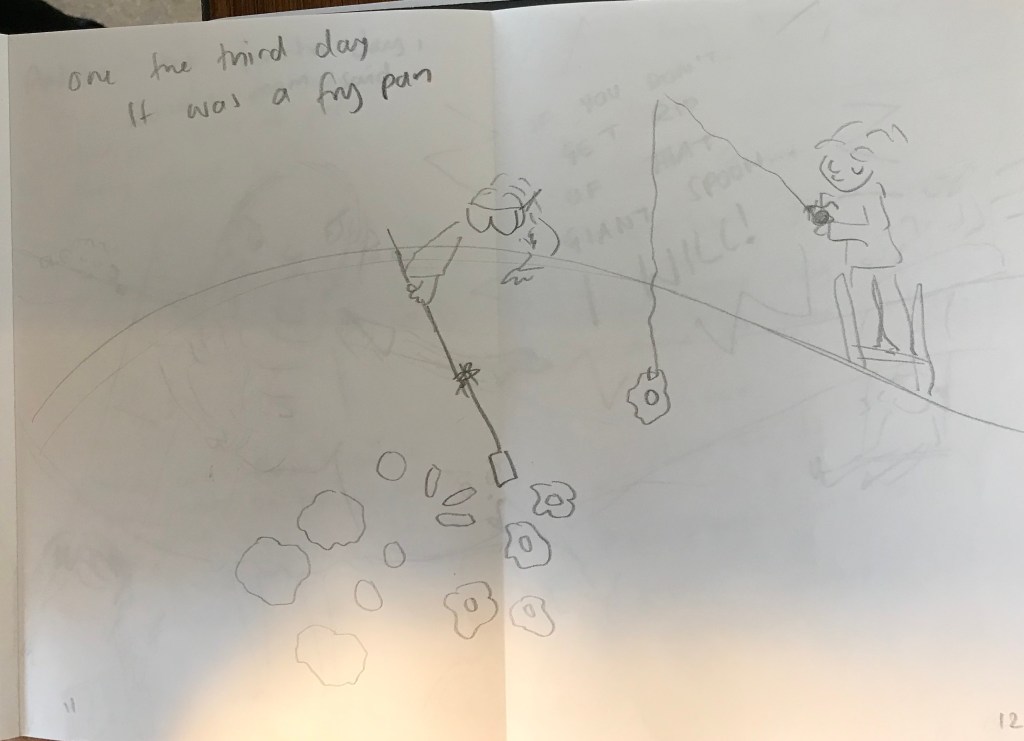
Refining the ‘spontaneous’
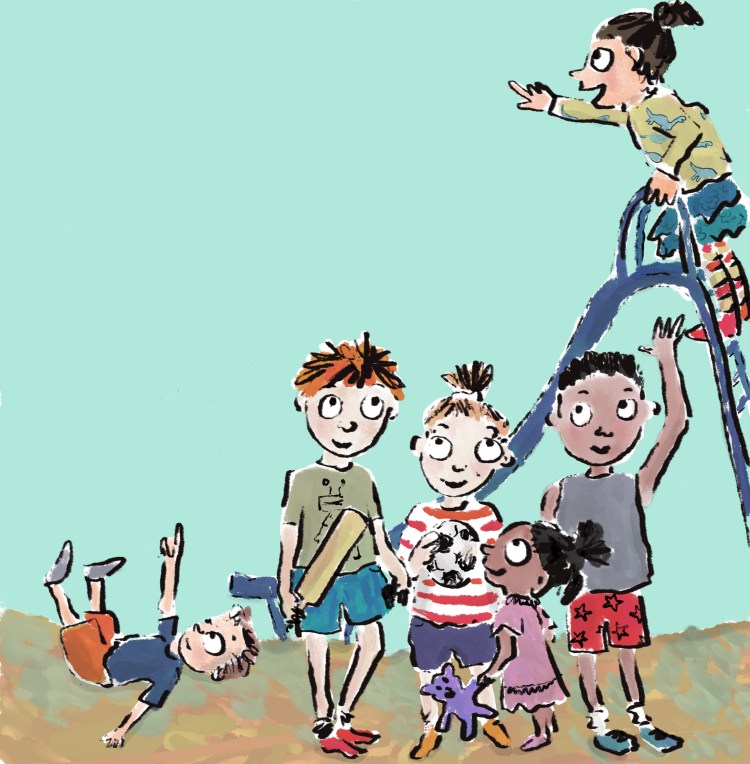
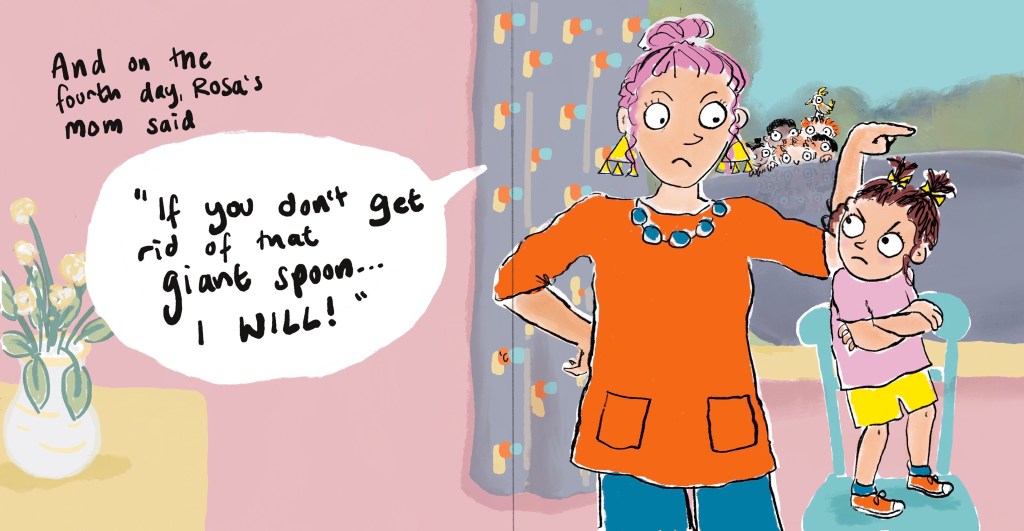
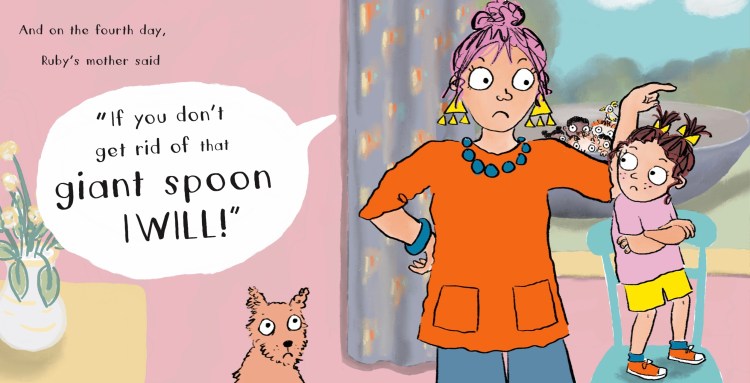
I think there’s a bit of a hangover from the world of fine art that assumes ‘loose’ to mean ‘done once, in a flash of genius!’. With more overly controlled work, it’s easy to see that this has taken lots of time to get it right. Loose is assumed to be quick. However, this is nonsense! Even working in oils, it’s possible to redo the same section – until the spontaneous strokes are the ones the artist is happy with. In my illustrations, most bits have probably been redrawn several times. Then tweaked. It can come down to tiny details: that eyebrow is too quizzical, this hand looks a bit stiff, something about her head angle isn’t right for the emotion of that moment… And then come changes based on feedback from all the other people involved on a project. And changes to the text (e.g. the character is no longer described as pregnant, the broccoli is falling not flying…). And finally, a lot of micro-tweaks to make sure I’m happy with everything (blending little bits of texture, noticing that one sock on one page is the wrong colour, deciding that a line is just slightly the wrong side of ‘good wonky’…).
I hope this gives a bit of insight into what is involved in my work, and inspiration if your own ‘quick’ drawings don’t feel quite ‘cooked’. The secret is, the loose, free ‘n’ easy stuff involves just as much fussing and finessing as highly ‘done’ styles: it’s just that part of that fussing is knowing when to stop yourself killing the feeling of the drawing or making it too tidy!
Here is an early version compared to a finished version… note all the changes!
 Lucy Jollow